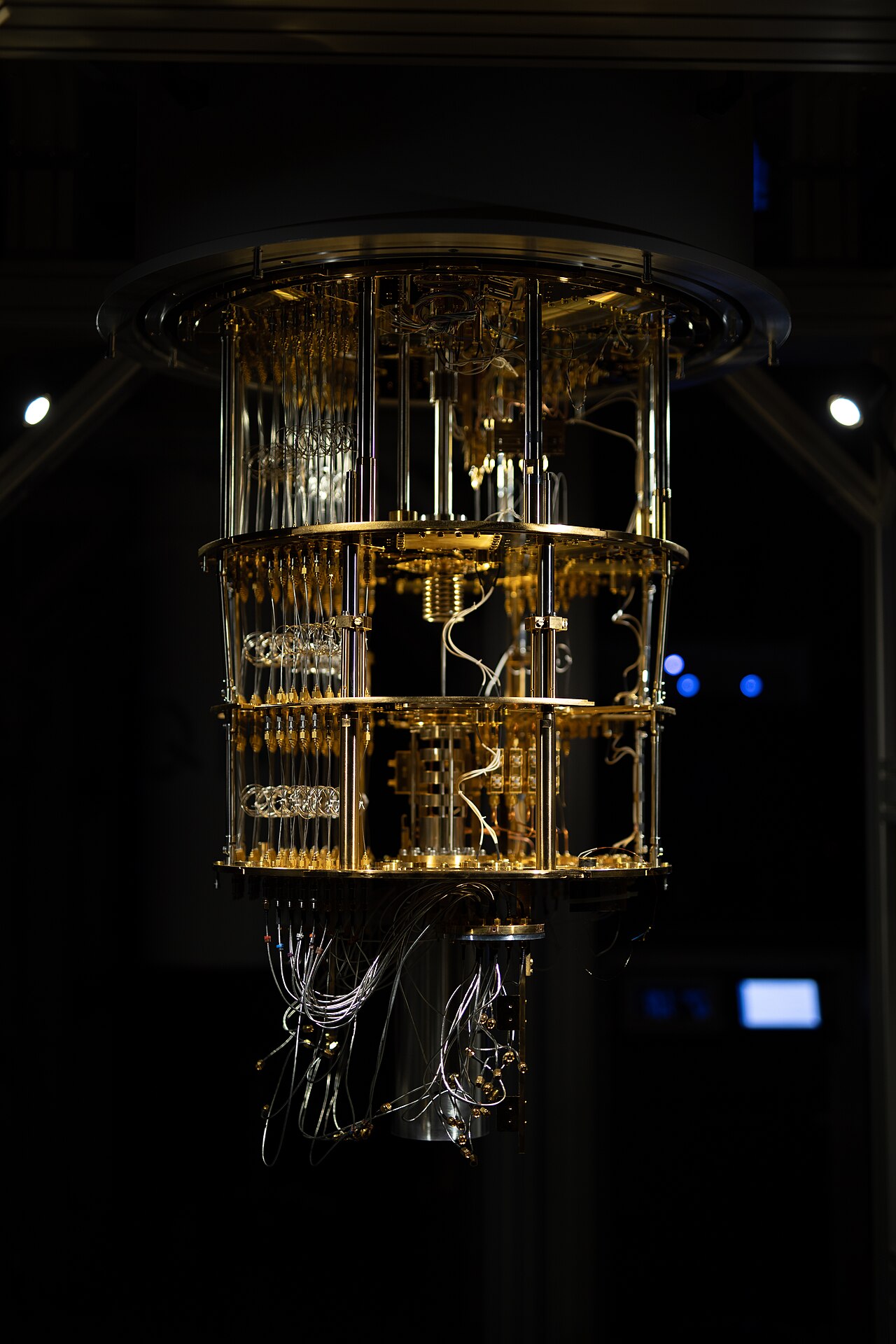
Quantinuum announced on Monday that its latest trapped‑ion processor, Helios, demonstrates a dramatic improvement in logical qubit reliability as the size of the error‑correction code grows.
The company’s experiments used the colour‑code family of error‑correction schemes, building logical qubits with distances three, five and seven by allocating 13, 37 and 73 hardware qubits respectively. For each increase in distance, the logical‑error rate fell by roughly a factor of 12 – from 5×10⁻⁴ to 4×10⁻⁵ and finally to 5×10⁻⁶. This scaling is the strongest yet reported and places Helios well beyond the breakeven point at which adding more qubits begins to reduce errors.
Helios’s architecture allows any two ions to be entangled by moving them into a common laser‑illuminated arm of a ring trap. The platform also incorporates a laser‑based leakage‑recovery routine that suppresses leakage errors by a factor of 6.5, and a software swap‑out mechanism that replaces leaked data qubits with fresh measurement qubits.
To characterise the system, the team performed 20 rounds of error‑correction before measuring the logical qubits’ memory fidelity. Real‑time decoding was achieved using three approaches – a standard algorithm, a convolutional neural network and a transformer‑based model – all of which operated within the tight timing constraints imposed by the error‑correction cycle.
When the logical qubits were used to execute a simple two‑qubit gate, the raw hardware error rate was about 10⁻³. The distance‑three code offered little improvement, but the distance‑five code reduced the logical‑error rate to 7×10⁻⁵, again confirming that Helios remains well past the breakeven threshold even under active gate operations.
The results also show that syndrome data from one round of correction correlates only with its immediate neighbours, indicating an absence of persistent, systemic error sources.
Market analysis
The demonstrated scaling has clear implications for the quantum‑computing market. Companies that rely on logical qubits – such as IBM, Google and Honeywell – must invest heavily in hardware to achieve comparable error rates. Helios’s ability to halve the logical‑error rate with a modest increase in qubit count could reduce the total qubit budget required for practical algorithms, lowering capital expenditure for both start‑ups and established players.
For investors, the breakthrough suggests that trapped‑ion technology, long considered slower than superconducting qubits, can achieve competitive error‑correction performance. This may shift funding flows toward ion‑trap developers and could accelerate the commercialisation of quantum‑assisted optimisation and cryptography services.
In the broader context of quantum‑software ecosystems, the efficient real‑time decoding demonstrated by Quantinuum highlights the importance of integrating machine‑learning techniques into quantum control pipelines. Firms offering quantum software stacks may need to adapt their architectures to leverage such hybrid approaches, potentially creating a new niche for specialised quantum‑software vendors.
Overall, Helios’s performance marks a milestone that brings logical‑qubit‑based quantum computing closer to the realm of viable, large‑scale applications.