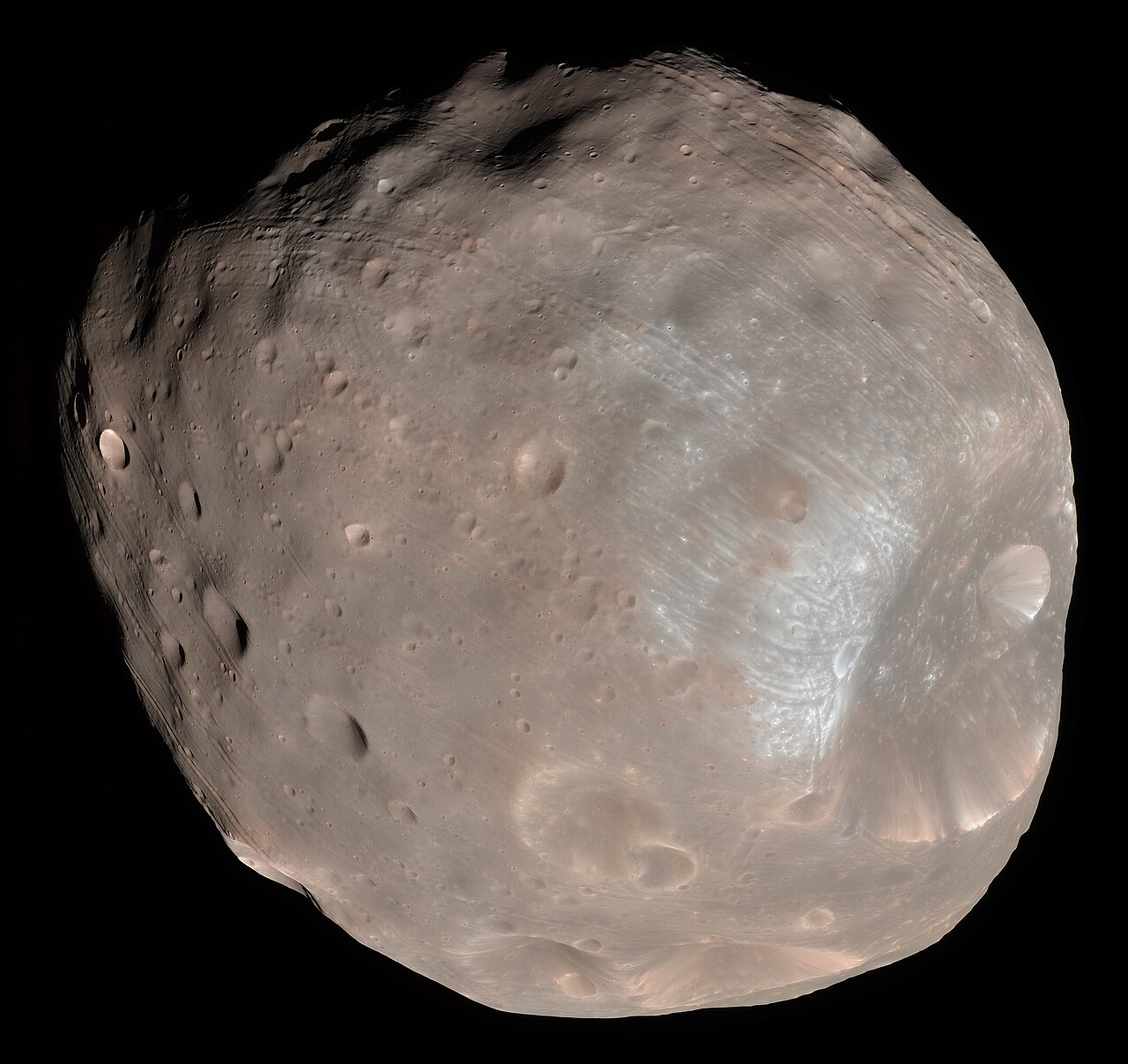
Japan’s Martian Moons eXploration (MMX) mission has taken off from Tanegashima Space Centre, launching a five‑year expedition to land on Phobos and return samples to Earth. The launch, conducted on a 207‑foot H3 rocket, marked the beginning of a project that could provide the first direct evidence of whether Phobos is a captured asteroid or the remnant of a giant impact on Mars.
The H3 vehicle, Japan’s most powerful launch system to date, carried the 9,900‑lb MMX spacecraft past Earth’s escape velocity at over 24,000 mph. The spacecraft, largely propellant, separated 71 minutes after liftoff and entered a stable orbit around the Sun, setting the stage for a 10‑month journey to Mars.
Once in Mars orbit, MMX will jettison its propulsion module and use its four‑legged exploration module to approach Phobos. The moon’s weak gravity and Mars’s stronger pull prevent a stable orbit, so the probe will adopt a quasi‑satellite trajectory, remaining bound to Mars while manoeuvring around the 22‑km‑diameter body.
A small rover, Idefix, supplied by ESA and the German Space Agency, will be released in late 2028 or early 2029 to explore Phobos for up to 100 days. The rover’s wheels will negotiate the moon’s uneven terrain, while the main MMX craft will conduct two landings in 2029. Each landing will deploy a coring drill and a NASA‑provided pneumatic sampler to collect a total of at least 10 g of material.
After sample collection, MMX will discard its landing gear, fire its engines in 2030, and head back to Earth. The return capsule will land in a remote zone of South Australia in 2031, where Japanese laboratories will analyse the samples. NASA will receive 15 % of the specimens in return for its contributions, including a gamma‑ray and neutron spectrometer and a sampler.
"Phobos could be a captured asteroid or the debris of an early Martian impact," said Tom Statler, NASA’s lead scientist for small bodies. "Bringing samples back will let us decide which scenario is correct."
The mission follows Japan’s successful Hayabusa and Hayabusa‑2 asteroid sample returns and builds on international cooperation, with NASA and European agencies providing key instruments. The data gathered will inform future mission planners about Phobos’s suitability as a staging point for human exploration between Earth and Mars.
Market analysis
The MMX launch represents a significant investment in Japan’s space sector, with a budget of $578 million and a projected return on scientific and technological expertise. Successful sample return could enhance Japan’s reputation as a leader in deep‑space exploration, potentially attracting further international collaboration and commercial partnerships. The mission’s reliance on NASA and ESA hardware may stimulate demand for specialised instruments and propulsion systems, benefitting suppliers in the aerospace supply chain. Moreover, the data on Phobos’s composition could influence future resource utilisation strategies, affecting companies involved in asteroid mining and in‑space manufacturing.
The project also underscores the growing trend of multinational sample‑return missions, which may lead to increased competition among space agencies and private firms for access to extraterrestrial materials. Investors in aerospace companies may view Japan’s continued success as a positive signal for the sector’s long‑term growth.