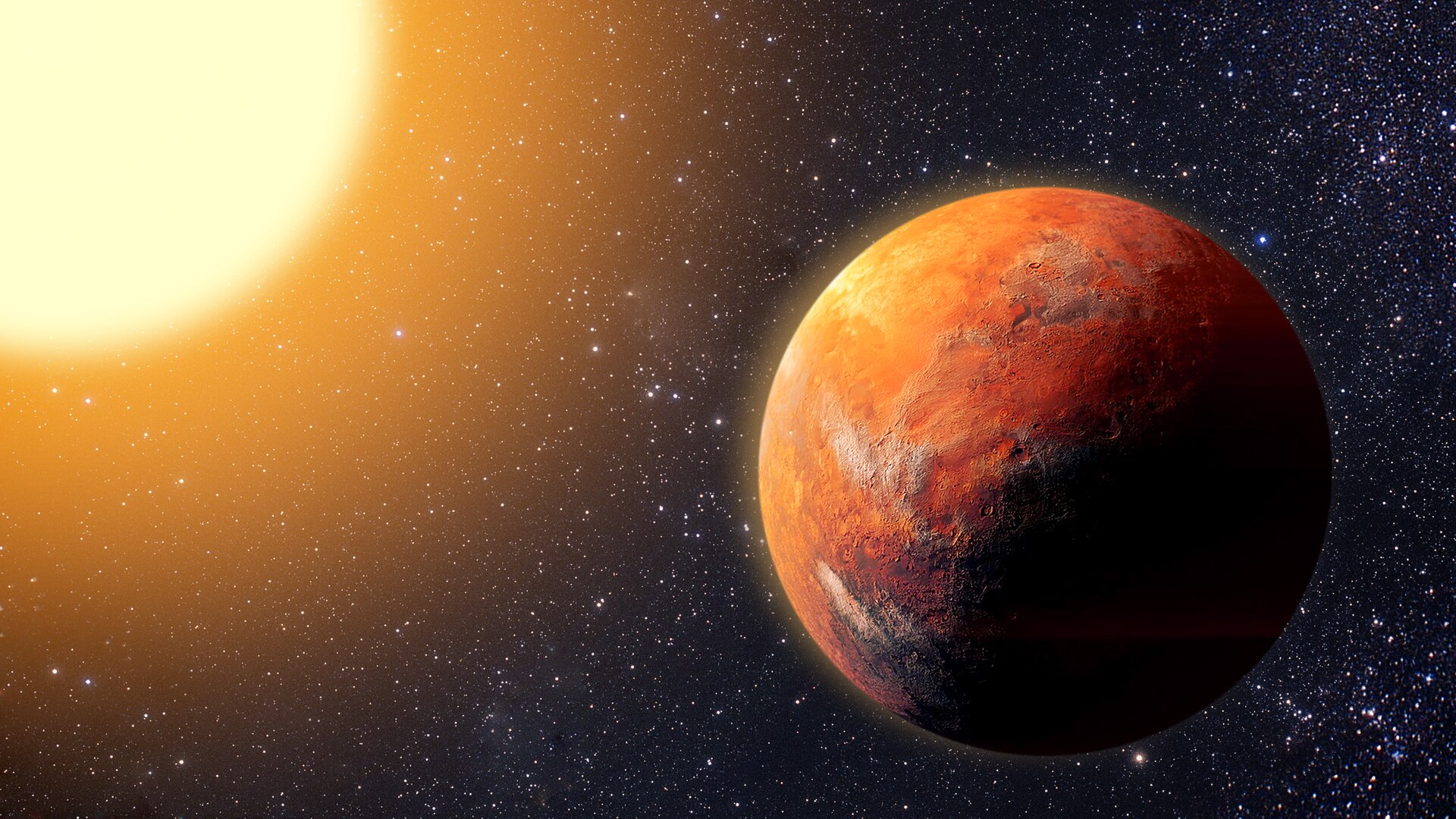
A newly confirmed exoplanet, Elias 2‑24 b, is now the youngest known world, with an age of under one million years. The discovery forces a rethink of how quickly giant planets can form and underscores the value of archival data from existing observatories.
A Record‑Breaking Discovery
Elias 2‑24 b orbits a young star 450 light‑years away in the constellation of Ophiuchus. Its mass is comparable to Jupiter’s, but it still resides within the dusty circumstellar disk that feeds its birth. The planet’s youth is inferred from its position in a gap carved into the disk, a hallmark of planet‑formation activity. This observation marks a dramatic step forward from the previous record holders—four planets orbiting PDS 70 and WISPIT 2, all older than five million years.
Implications for Planet‑Formation Theory
Current models predict that a Jupiter‑mass planet at a distance similar to that of Jupiter from the Sun requires roughly five million years to assemble. The presence of Elias 2‑24 b, located 55 times farther from its star than Earth is from the Sun, challenges these timescales. The planet’s existence suggests that additional, as‑yet‑unidentified processes accelerate growth in the early stages of planetary systems.
Who Stands to Gain
The finding is a boon for astronomers working at the frontiers of exoplanet science. Professors Lucas Cieza of the Instituto de Estudios Astrofísicos and Andrea Bernardi, a doctoral candidate at Universidad Diego Portales, led the study that combined observations from the W. M. Keck Observatory’s coronagraph with archival data from 2018 and 2020. Their work demonstrates the power of re‑examining existing datasets to uncover new phenomena.
Market analysis
The confirmation of Elias 2‑24 b highlights several trends that may influence the commercial space and scientific instrumentation sectors. First, the successful use of archival Keck data underscores the growing value of data‑sharing agreements and open‑access repositories, potentially encouraging more investment in data‑management infrastructure. Second, the discovery illustrates the limitations of current telescopes in detecting young, embedded planets, thereby reinforcing the demand for next‑generation instruments such as NASA’s Nancy Grace Roman Space Telescope. Roman’s advanced coronagraph and wider field of view will enable systematic surveys of protoplanetary disks, opening new revenue streams for manufacturers of high‑contrast imaging systems and for companies that provide software for data analysis.
Third, the need to refine planet‑formation models may spur collaborations between academia and industry, particularly in the development of high‑performance computing platforms and machine‑learning algorithms capable of simulating disk dynamics at unprecedented resolution. Such collaborations could attract venture capital and government grants aimed at advancing computational astrophysics. Finally, the heightened public interest in exoplanet discoveries offers marketing opportunities for educational content providers, space‑tourism companies, and media outlets that specialize in science communication.
The Path Forward
The confirmation of Elias 2‑24 b was made possible by combining observations from multiple facilities—a strategy that will become increasingly standard as astronomers push the boundaries of detection. The planet’s location, about ten times farther from its star than Earth, places it at the edge of current imaging capabilities. Roman, launched on 30 August, is expected to probe smaller orbits and detect true Jupiter analogues that remain invisible to present instruments.
Astronomers anticipate that Roman’s survey of young stellar disks will reveal a statistically significant sample of nascent planets, allowing researchers to map the timeline of planetary assembly with unprecedented precision. Such data will feed back into theoretical models, potentially resolving the discrepancies highlighted by Elias 2‑24 b.
In the coming years, the combination of archival data mining, advanced imaging, and sophisticated simulations will likely transform our understanding of how planetary systems emerge. The discovery of a planet that is less than one million years old serves not only as a milestone in exoplanet science but also as a catalyst for technological and commercial innovation in the space sector.